

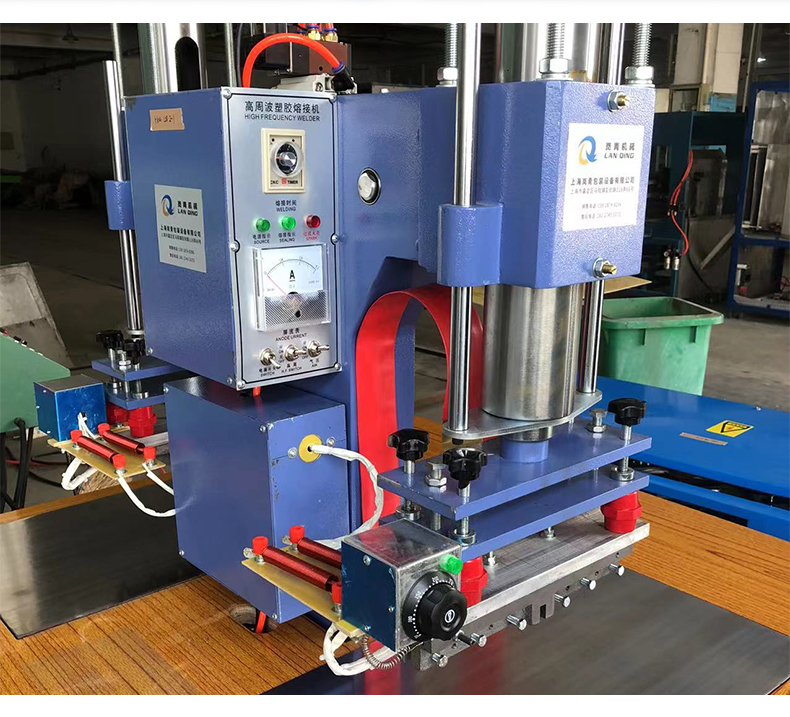
High frequency plastic welding machines generally have overload protection devices. When overload occurs, the protection circuit will activate, causing the equipment to automatically shut down. This is to prevent equipment from being damaged due to prolonged overload operation. For example, in some fusion splicers, when the current exceeds around 120% -150% of the rated value, the overload protection relay will activate, cutting off the power supply to the equipment, and the equipment will suddenly stop working. Frequent tripping is also a clear manifestation of overload, which may be due to the sensitivity of overload protection devices. When the equipment attempts to restart or continue working, if the overload situation is still detected, it will trip again.
2. Abnormal increase in working current
The changes in operating current can be observed through the ammeter on the device. Under normal circumstances, the current of the high-frequency plastic welding machine is relatively stable during operation and will be within the rated current range specified in the equipment manual. When overload occurs, the current will significantly exceed this range. For example, the rated working current of a certain type of fusion splicer is 10A, and under overload conditions, the current may rise to 15A or even higher. Moreover, as the overload situation worsens, the current may continue to rise.
3. The quality of plastic welding has decreased
Due to overload, the high-frequency energy output of the equipment is unstable, which directly affects the quality of plastic welding. There may be unstable welding at the fusion joint, such as gently pulling the fused plastic product with your hand, which can easily cause the fusion joint to separate. At the same time, bubbles may form at the welding point because unstable high-frequency energy prevents the plastic from being uniformly heated during the welding process, and the gas inside the plastic cannot be completely discharged. In addition, the fusion surface may become uneven, resulting in burning or partial lack of fusion.
4. Severe heating of the equipment
When overloaded, the electronic components inside the device (such as tubes, transformers, capacitors, etc.) will pass through a larger current than normal operation. According to Joule's law (Q=I)^ {2}Rt )(where (Q) is heat, (I) is current, (R) is resistance, and (t) is time), an increase in current (I) will cause a sharp increase in the heat generated by these components. You can clearly feel the temperature rise of the device casing, and even feel hot to the touch. For example, during normal operation, the temperature of the equipment casing may be around 40-50 degrees Celsius, and during overload, it may rise to 70-80 degrees Celsius. If left in this high temperature state for a long time, it will not only affect the performance of the equipment, but may also damage the internal components of the equipment.
5. Generate abnormal noise or odor
When overloaded, due to the increase in current, components such as transformers inside the equipment may produce abnormal buzzing sounds due to iron core saturation. At the same time, excessive current may cause some components (such as the insulation layer of wires, the casing of capacitors, etc.) to overheat, resulting in the burning of insulation materials and the production of pungent odors. This odor may be the smell of burnt plastic or burning insulation on wires. Once this odor is detected, the equipment should be stopped immediately to prevent dangerous situations such as fires.
High frequency servo welders、Automatic High Frequency Welders、High Frequency Welding Equipment