

Production of advertising materials – particularly billboards and banners – necessitates meticulous attention at every stage of their development. From the initial design to the final touches and installation, prioritizing quality is crucial. Both billboards and banners, which are distinct forms of advertising and should not be conflated, can endure for years, provided they are versatile and durable.
An impactful billboard or banner advertisement should primarily be versatile. While they can certainly be utilized for short-term, specific campaigns, they are more effective for long-term brand-building efforts. This requires crafting universal content during the design phase, encompassing both messaging and graphic design.
Key technical features of banners
When examining the technical attributes of high-quality billboards or banners, whether in terms of craftsmanship or materials, it's essential to recognize the differences between the two formats. They are frequently mistaken for one another, but the disparities are significant.
Wallscape Billboards are affixed directly to building surfaces, eliminating the need for additional structures, often utilizing a reinforcing framework that can be dismantled if necessary. Another type is floating billboards, which have a fixed structure but can be relocated.
The third type are billboards that are permanently anchored to the ground. This offers the most enduring display medium but offers limited flexibility for rapid replacement.
In contrast, banners exhibit slightly different characteristics. They come in two main configurations: one illuminated from the front and the other from the back. Furthermore, their surface finishes can vary, such as being laminated, reinforced, or tailored during printing to withstand, for instance, intense sunlight exposure.
How are banners and billboards printed?
Banners and billboards are produced through a printing process that involves transferring vibrant graphics onto a fabric sheet. Large-format printing facilities employ specialized printers, such as solvent plotters, which are capable of applying computer-generated designs onto a variety of surfaces, including paper, polypropylene film, vinyl, mesh, fabric, and other materials. The printing methodology varies depending on factors such as the surface characteristics of the material being printed on. For smaller materials, there is typically no need to join individual sections of the banner or billboard. However, given that most plotter models have a maximum width of 0.5 meters, larger graphics must be printed in multiple sections.
Once the banner is printed, the fabric sheet is trimmed and allowed to dry.
The subsequent step involves reinforcing the advertising material with what is known as a weld. This can be visualized as a specialized overlap, usually measuring 3 to 5 centimeters in width, that is securely bonded to the inner side of the banner. At this juncture, ensuring flawless aesthetics in the finishing process is crucial—a well-executed weld should appear seamlessly smooth.
Moreover, the weld forms a reinforcing edge that is essential for fitting special metal grommets. Attention to precision is vital when installing these grommets, as they must not be able to rotate freely around their central axis. If this occurs, the grommets may become dislodged, leading to a compromise in the banner's structural integrity. Consequently, it should be noted that the banner is only considered ready for use after the complete process of welding and grommet installation has been successfully completed.
What equipment is essential in the advertising industry?
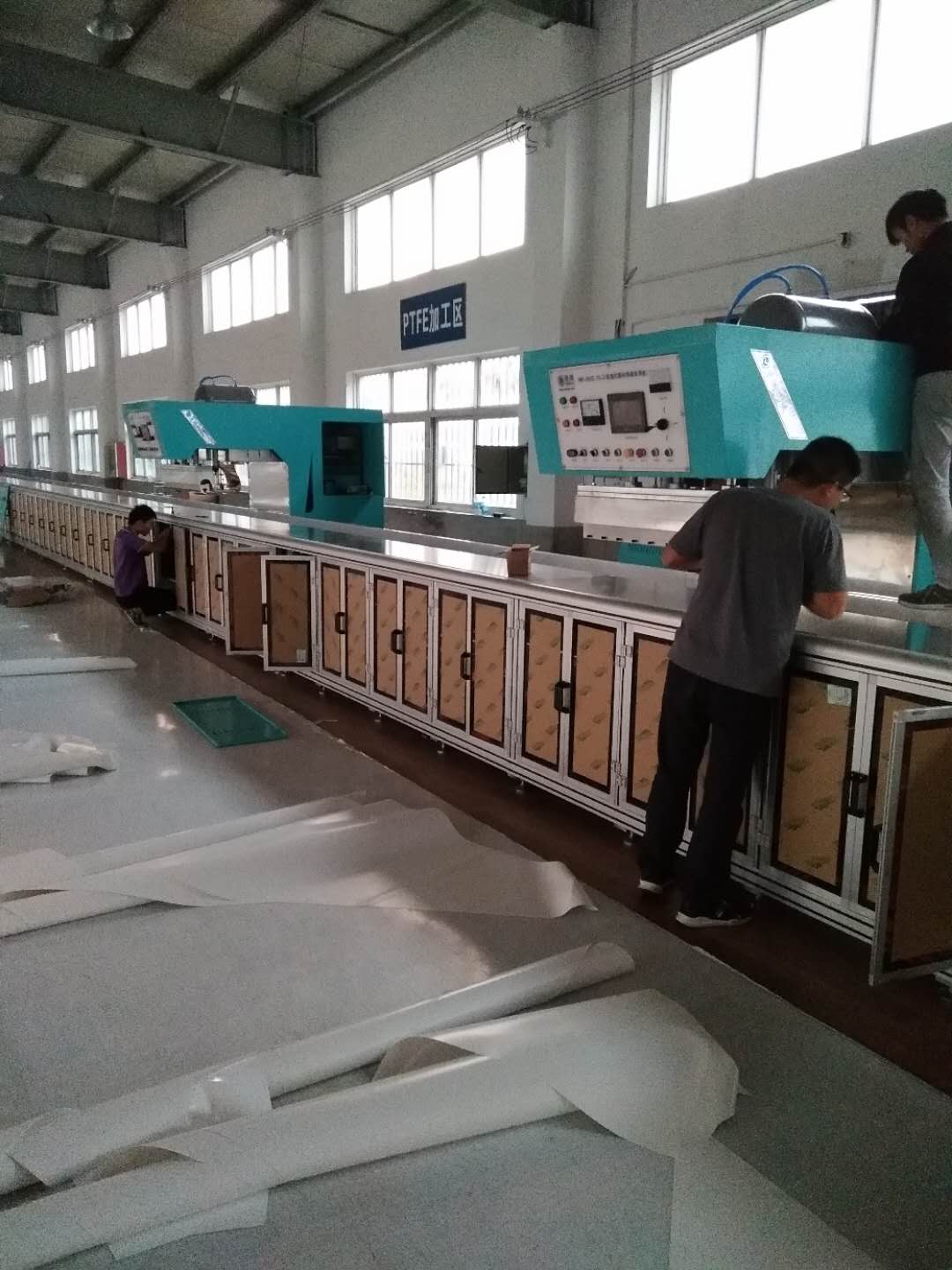
The cornerstone of any machinery setup in the advertising industry is undeniably the High Frequency Membrane Structure Welding Machine. The more robust and adaptable this machine is, the more efficiently advertising materials can be manufactured, with welds that are both stronger and more resilient. For specialized projects and diverse material types, the Hf Pvc Membrane Structure Welding Machine is an excellent choice, tailored for crafting smaller to medium-sized items like tents, tarpaulins, or tensile structures. In both scenarios, maintaining comprehensive oversight of the production process is paramount. The High Frequency Membrane Structure Welding Machine ensures this through its specialized welding control system and autotuning capabilities.
When it comes to producing the distinct eyelets used in banners, the Standard Foot Pedal High Frequency Welders—a high-quality high frequency welder specifically designed for eyelets—can seamlessly weld them directly onto your banners. It's also worth highlighting the versatility of the Standard Foot Pedal High Frequency Welders, which doubles as a cutting plotter for automated, rapid, and precise cutting of technical textiles.
A machinery setup equipped with these devices will streamline the execution of a wide array of marketing initiatives. This includes not only large-format billboards but also banners, exhibition stand components, advertising graphics, and promotional signage.